
Who this is for: OEM buyers with drawings, material specifications and a quality team, and product owners who have a design but need manufacturing guidance. The questions are different, but both need to know where the factory is, what it can make and what must be confirmed before quoting.
Quick answer
Cambodia is in Southeast Asia, west of Vietnam and east of Thailand, with Laos to the north. It has a growing plastic injection molding base, but the number of factories with export-oriented audits, in-house secondary operations and experience with US or EU retail programs is smaller than in Thailand, Vietnam or Malaysia. Buyers should compare the actual production location, tooling support, audit evidence and capacity before comparing piece price.
Why Cambodia is hard to place on a map
Many Western buyers do not have a clear mental map of Cambodia. For sourcing, the useful anchor is regional: Cambodia is in mainland Southeast Asia, shares a border with Thailand to the west and Vietnam to the east, and sits south of Laos. The Everest factory is in Kampong Speu province, in the western part of the country, with road access toward Phnom Penh and the Sihanoukville port corridor. That geography matters because it shapes material imports, mold transfer and export routing.
What buyers should compare in Cambodia
Cambodia is not a single supplier market. A useful shortlist separates factories by the work they actually do, not by the country label.
- Actual production location. Confirm the factory address and which processes happen there. A sales office or trading company is not a factory.
- Tooling depth. Cambodia has a smaller precision mold base than China, Vietnam or Thailand. Ask where the mold will be designed, built, tried and maintained.
- Machine fit. Check clamping force, tie-bar spacing, shot size, mold dimensions and material. A tonnage range alone does not prove a specific part can run.
- Secondary operations. Painting, printing, welding and assembly add handling. Confirm whether they are in-house or subcontracted and how they are controlled.
- Audit evidence. Retail and OEM programs often require social compliance and factory capability evidence. Ask for the current report, scope and date, not a logo.
- Material and component sourcing. Some resins, metal parts, electronics, rubber parts, screws and packaging may still be imported, often from China or neighboring countries. That affects lead time and origin.
- Capacity and peak planning. Ask about current loading, shift pattern and how capacity is reserved for launch and repeat orders.
The Cambodia supplier landscape
Cambodia's injection molding base includes factories serving domestic packaging and consumer products, export-oriented factories backed by Asian tooling groups, and smaller job shops. They are not interchangeable. A factory that is strong in high-volume household goods may not be set up for cosmetic painting, multi-part assembly or retail packing. A factory with a China tooling partner may have deeper mold support but still import complex molds. Buyers should ask for the process route and the evidence behind each claim.
Where Everest fits
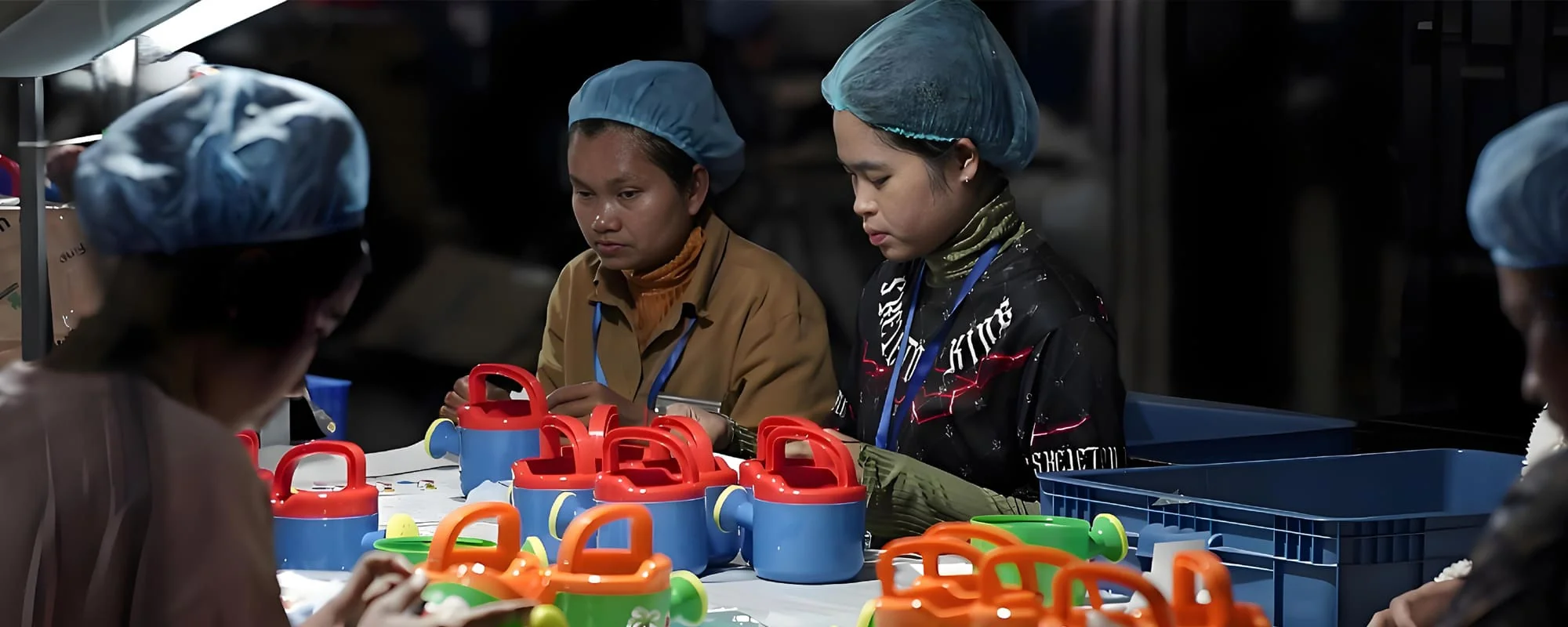
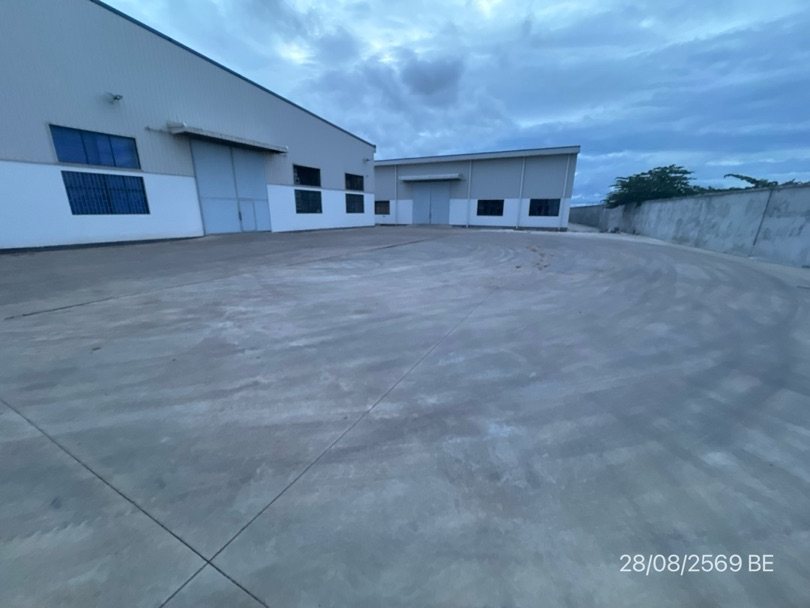
Everest Plastic Mold operates a custom injection molding factory in Kampong Speu, Cambodia. The site lists 16 injection molding machines from 80T to 1000T, about 4,500 m² of production area and overall capacity of about 200,000 pieces per month. In-house operations include injection molding, assembly, spray painting, UV coating, rubber-oil soft-touch coating, pad printing, silk-screen printing, hot stamping and ultrasonic welding. The factory holds a Sedex SMETA 4-Pillar audit and passed an FCCA Follow-Up Audit with a score of 84 on 28 August 2026.
China Tooling Support is provided from Shenzhen, China, by our China company JR Plastic Mold. The China side has in-house mold manufacturing and large-volume injection molding capability. Project allocation between China and Cambodia is confirmed per project; not every project uses both countries.
Where Cambodia fits, and where it does not
| Project type | Fit | Why |
|---|---|---|
| Toy, household, holiday and gift programs with painting, printing and assembly | Good fit | Labor-intensive secondary operations and retail packing can be handled in-house. |
| China mold transfer for an existing program | Good fit | Mold review, transfer planning and production can be coordinated with China Tooling Support. |
| Retail compliance and social audit requirements | Good fit, verify scope | SMETA and FCCA evidence exists; the buyer must confirm the audit scope and date match their program. |
| Ultra-precision, multi-cavity or high-tonnage molds needing local iteration | Weak fit | Cambodia has a smaller precision mold ecosystem; complex molds are usually imported. |
| Programs requiring all materials and components locally | Weak fit | Some resins, metal, electronic and rubber parts are imported. |
When Cambodia is the wrong first choice
If the project needs ultra-precision tooling, very large multi-cavity molds, same-week local mold iterations or a deep local mold supply chain, China, Thailand or Vietnam may be a better first comparison. Cambodia is stronger for labor-intensive assembly, China mold transfer, retail compliance and China-plus-one programs where the buyer can plan mold and material lead time.
Next step
Send the drawing, material, annual volume, current mold location and destination market. If the design is not complete, send product photos, intended use, approximate size and expected quantity so the engineering team can identify what is needed next. A formal quote requires a defined part and volume; photos alone are not enough for an accurate production quote.
Related guides: plastic injection molding companies in Southeast Asia, Asia supplier comparison, Thailand vs Vietnam vs Malaysia vs Cambodia, injection molding cost and mold transfer checklist.
Frequently asked questions
What plastic injection molding companies operate in Cambodia?
Is Cambodia in Southeast Asia or South Asia?
Can a Cambodian factory support US or EU retail programs?
Do Cambodian factories make their own molds?
What is the minimum order in Cambodia?
How long does production take in Cambodia?
When should a buyer not choose Cambodia?
Does Everest have factories outside Cambodia?
Review a Cambodia production program
Send the drawing, material, annual volume and current mold location.